
Are you wondering how affiliate marketing and influencer marketing differ—and which one fits your business goals better? You’re not alone.
Both strategies can boost your brand, but they work in very different ways. Affiliate marketing rewards you only when sales happen, making it a smart choice if you want clear, measurable results. Influencer marketing, on the other hand, helps you build trust and connect emotionally with your audience, even if sales don’t come immediately.
Understanding these differences can help you decide where to focus your time and budget. Keep reading to discover how each approach works, why they matter, and how you can use them to grow your brand effectively.
Affiliate Marketing Basics
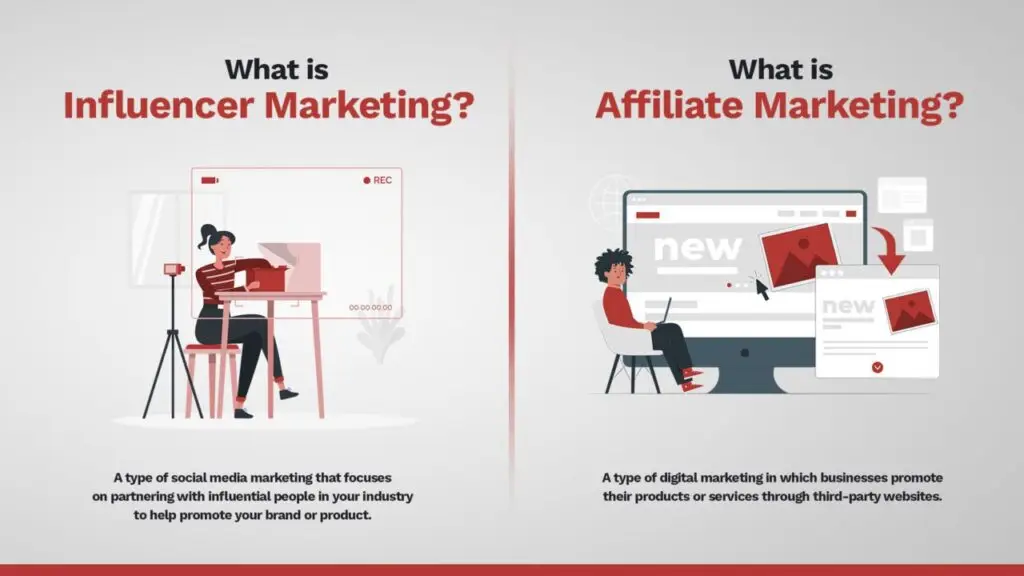
Affiliate marketingaims to boost sales by rewarding affiliates for each purchase. The main goalis to drive conversions and increase revenue.
Payment is based on a commission structure. Affiliates earn money only when sales happen. This method lowers risk for brands.
Content usually includes product reviews, tutorials, or links. Affiliates share these on blogs, websites, or social media.
Trackingis done through special links or codes. This helps measure clicks, sales, and affiliate performance clearly.
Influencer Marketing Basics
Influencer marketingaims to build brand trustand awareness. Brands pay influencers a fixed feefor sponsored content. The content styleis usually creativeand personalized. Metrics like engagement, reach, and followers growthmeasure success.
The payment structureis simple: influencers get paid for posts, stories, or videos. It does not depend on sales or clicks. The content often shows how the influencer uses or likes the product.
|
Aspect |
Details |
|---|---|
|
Goals and Objectives |
Increase brand trust and reach a broad audience |
|
Payment Structure |
Fixed fee for sponsored content, not based on sales |
|
Content Style |
Creative, personal, and relatable to the influencer’s audience |
|
Measurement Metrics |
Engagement rates, follower growth, reach, and impressions |
Core Differences
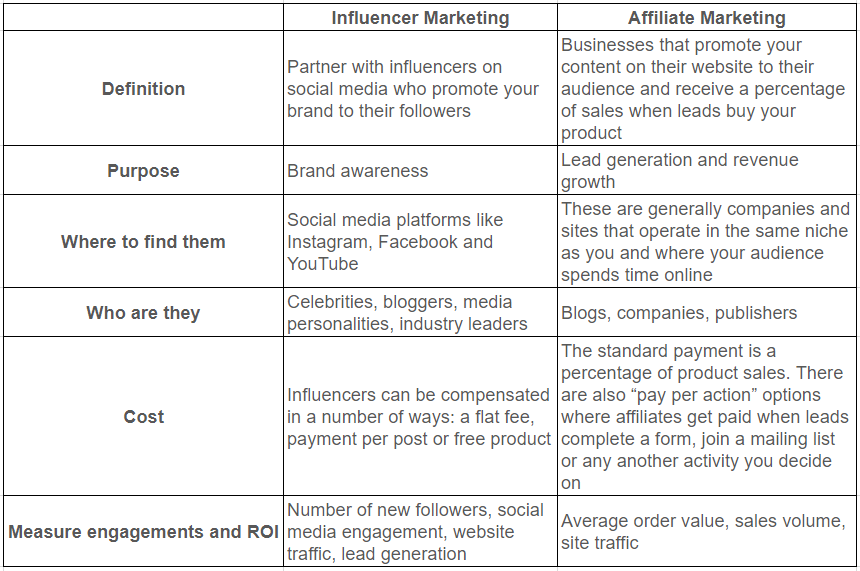
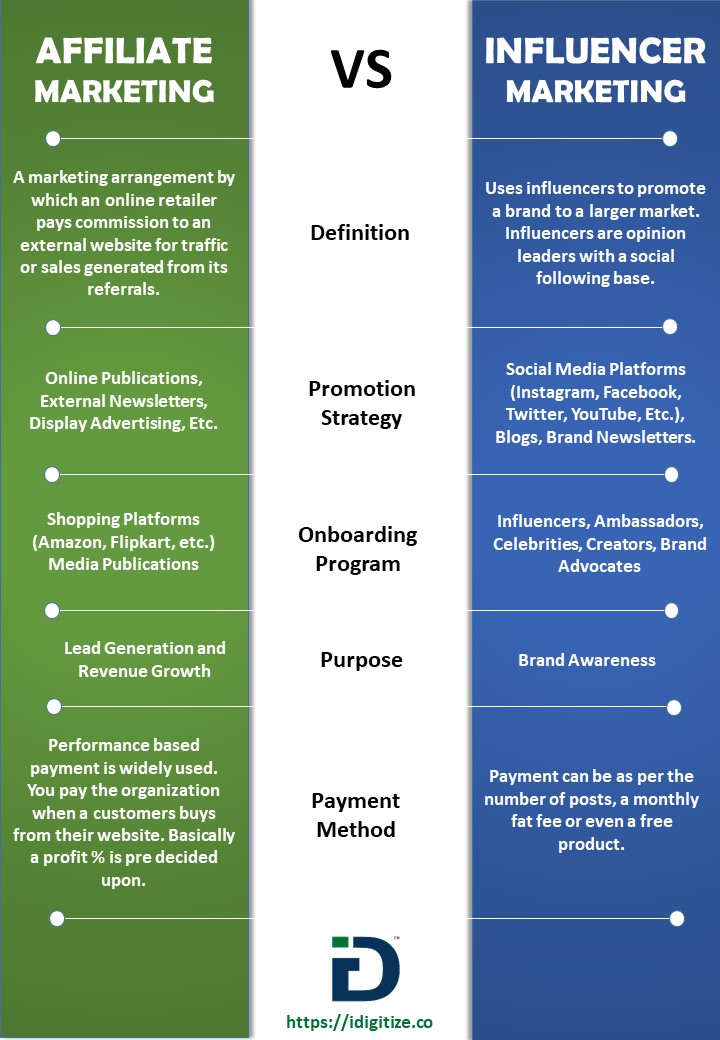
Affiliate marketingfocuses on driving sales through special links. Marketers pay commissionsonly when a sale happens. It is a performance-basedmodel.
Influencer marketingaims to build brand trustand awareness. Brands pay influencers upfrontfor posts that reach many followers.
|
Aspect |
Affiliate Marketing |
Influencer Marketing |
|---|---|---|
|
Focus and Approach |
Sales and conversions via tracked links |
Brand awareness and audience engagement |
|
Compensation Models |
Pay per sale or action (commission) |
Fixed payment for sponsored content |
|
Role of Content Creators |
Promote products with referral links |
Create engaging content to build trust |
Choosing The Right Strategy
Affiliate marketingsuits businesses aiming to drive direct sales. It works best when you want measurable results and pay only for performance. This strategy fits well for brands with clear products and easy online purchase paths.
Influencer marketingis ideal to build brand awarenessand trust among target audiences. It works well for new product launches or when a brand wants to connect emotionally with customers. Influencers create content that feels personal and authentic.
|
When to Use Affiliate Marketing |
When to Use Influencer Marketing |
|---|---|
|
Focus on direct sales and commissions |
Focus on brand visibility and trust |
|
Clear product with easy online buying |
New product launches or awareness campaigns |
|
Pay only for results (sales) |
Pay upfront for sponsored content |
|
Performance-based model |
Content-driven, relationship building |
Combining Both Strategies
Combining affiliate marketing and influencer marketingcan boost brand success. This mix uses affiliate linkswithin influencer content, which helps track sales and rewards both parties. Brands get wider reach and better sales data.
Benefits include higher trustfrom audiences, since influencers share honest reviews. It creates a win-win: influencers earn commissions and brands get genuine promotion. This approach also cuts marketing costs by focusing on performance.
|
Campaign |
Strategy Used |
Result |
|---|---|---|
|
Fashion Brand X |
Influencers shared affiliate links in posts |
30% increase in sales in 3 months |
|
Tech Gadget Y |
Affiliate codes given to influencers |
20% growth in website traffic |
|
Health Product Z |
Influencer reviews with affiliate discounts |
15% boost in repeat customers |
Frequently Asked Questions
Is Affiliate Marketing The Same As Being An Influencer?
Affiliate marketing pays commissions for sales generated via unique links. Influencers promote brands to build awareness and trust, often paid upfront. They differ in goals and payment but can overlap when influencers also use affiliate links.
Can You Make $100 A Day With Affiliate Marketing?
Yes, making $100 a day with affiliate marketing is possible. It requires consistent effort, niche targeting, and effective promotion strategies. Success depends on traffic quality, product choice, and audience trust. Many affiliates reach this goal by optimizing content and using multiple marketing channels.
What Are The 3 R’s Of Influencer Marketing?
The 3 R’s of influencer marketing are Reach, Relevance, and Resonance. They measure audience size, content alignment, and emotional connection.
Who Is The Highest Paid Affiliate Marketer?
The highest paid affiliate marketer is Pat Flynn. He earns millions annually through smart, diversified affiliate strategies and online businesses.
Conclusion
Affiliate marketing and influencer marketing both help brands grow. Affiliate marketing pays for actual sales or actions. Influencer marketing builds trust and brand awareness. Many influencers also use affiliate links. Choosing the right method depends on your goals and budget.
Both strategies can work well together. Understanding their differences helps you decide wisely. Keep your marketing clear and focused. Success comes from knowing what fits your brand best.